
As Nepal moves on from the horrors of violence that took place during the Gen Z revolution, the families who lost their loved ones cannot. During what should be the most festive time of the year, their homes are filled with grief and confusion.
What began as a peaceful protest on September 8 against corruption and the government’s social media ban quickly escalated into a violent uprising that continued the following day, leaving at least 74 people dead. According to Nepal Police records, there were 13,182 instances of firing nationwide over the two days. Most were from lethal weapons such as INSAS rifles, SLRs and pistols. Post-mortem reports from Tribhuvan University Teaching Hospital confirm that high-velocity bullets caused most deaths. Police data show 2,642 live rounds, 1,884 rubber bullets, 2,377 warning shots, and 6,279 tear gas shells were fired. The Kathmandu Valley witnessed the highest intensity of violence, followed by Madhesh, Koshi, and Karnali provinces.
Among the dead were not only protesters, but also bystanders far from the scenes of unrest. Who will take accountability? Interim government Prime Minister, Sushila Karki, announced a compensation of Rs. one million for each victim’s family and declared September 17 as National Day of Mourning. Yet, grieving families search for justice, they know no amount of aid can fill their loss. We bring a few such stories, drawn from the memories of loved ones and social media accounts, aim to honour the courage of the young martyrs and to ensure their voices are never forgotten.
His leadership was not about titles or recognition but about action and empathy. “He was the most patriotic of us all,” one of his close friends shared. That same deep love for his country and community is what took him to the streets, to stand for what he believed was right, to demand accountability, and to speak for those who could not.
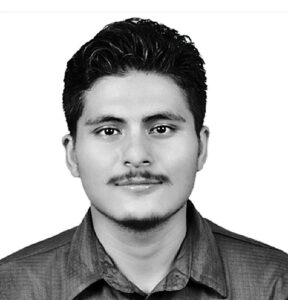
Sulov Raj Shrestha
Age 21
A bright engineering student at Kathmandu Engineering College, Sulov was waiting to earn his professional engineering licence, a milestone he had worked tirelessly toward. He was also a prominent figure on campus, leading the student body with confidence and conviction. Beyond his academic and leadership pursuits, he was the beloved cricket team captain from Banke, admired for his discipline, humility and sportsmanship. To his parents, Narendra and Bina Shrestha, Sulov was not just their only son, he was the heartbeat of their home, the laughter that filled their days, and the pride of their lives. But on September 8, their world shattered irreparably. On that tragic day, while standing with his generation to have his voice heard, Sulov was brutally silenced.
As news outlets proclaimed the dawn of a “new era” for the country, the Shrestha home was enveloped in emptiness. Those headlines meant nothing to parents who had lost the very reason for their existence. The home that once echoed with his jokes and footsteps now carries only the weight of his absence, a void that words cannot define.
Sulov was more than an engineering student; he was a dreamer who believed education could change not just his life but the lives of others. Though his background was in technical studies, he aspired to pursue a master’s degree in political science. His ambition was rooted in service, to use knowledge as a tool for justice and reform. His friends describe him as the kind of person who never hesitated to put others first, the one who would quietly notice when someone was struggling and offer help without being asked.
His leadership was not about titles or recognition but about action and empathy. “He was the most patriotic of us all,” one of his close friends shared. That same deep love for his country and community is what took him to the streets, to stand for what he believed was right, to demand accountability, and to speak for those who could not. It was that conviction, born from both intellect and heart, that ultimately cost him his life.
Yet, Sulov’s story is not one of tragedy alone. It is also a story of courage, compassion and an unbreakable spirit. To his friends, he will always be remembered as the dependable one, the first to lend a hand and the person who would carry you himself if you could not walk any longer. His memory now stands as a symbol of resilience and hope for a generation determined to create change.
”Today, her absence haunts her family’s home. The laughter, the energy, the light she brought into every room, all silenced in a moment of senseless violence. Nikita Gautam’s life was short, but her voice – her belief in a better, freer Nepal – lives on. Her story stands as a reminder of how fragile hope can be, and how high the cost of silence has become.”
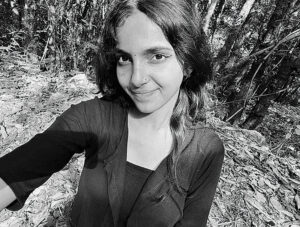
Nikita Gautam
Age 19
A young woman full of dreams, curiosity and conviction. Like many of her generation, Nikita believed in the movement that Nepal’s Gen Z had begun – a fight for transparency, justice and the freedom to speak. From her home in Gaushala Chowk, Kathmandu, she watched the crowds surge through the streets, their chants echoing against the city walls. She was not on the front lines that day; she was simply an observer, a supporter watching from the terrace. Yet, in a cruel twist of fate, her life was taken by the very violence she abhorred.
It was September 9, a day after the initial peaceful protest had turned deadly. The youth had returned to the streets – angry, grieving and determined to demand accountability for those killed on September 8. From his four-story home nearby, Kumar Upadhyay stood watching the demonstration unfold. Without warning, gunfire erupted as police opened fire to disperse the protesters. Kumar suddenly felt a searing pain shoot through his arm and back. He fell to the ground, bleeding, confused by the sudden attack. As his family rushed toward him in panic, they found another body lying close by – a young woman collapsed in silence. Only then did they realize the horrifying truth that the same bullet that had torn through Kumar had first struck Nikita.
Amid the chaos and screaming, Nikita’s family and friends fought to get her to the nearest hospital. Their desperate efforts were in vain. Doctors pronounced her dead, on arrival. In an instant, a young life brimming with potential and promise was gone, a casualty not of participation, but of presence.
The Gautam family had been living as tenants in Kumar’s building. Nikita had recently completed her high school studies and was eagerly preparing to fly to Denmark where her elder brother lived. There, she had planned to pursue her undergraduate degree, a new chapter that she and her family had long awaited. Just days earlier, her mornings were filled with excitement and hope. On that Monday, she had woken up early, captivated by the unfolding protests. Her phone screen became her window to a movement redefining her generation. She showed her mother short clips of the demonstrations; her voice filled with admiration and disbelief at the bravery of the youth.
But as reports began to flood in that 19 young people had been killed during the unrest, her joy turned to heartbreak. “Why did they kill them?” she had asked her mother in disbelief. “If young people continue to be killed like this for raising their voices, who will want to live in this country?” Her words, spoken in sorrow, would become prophetic.
Today, her absence haunts her family’s home. The laughter, the energy, the light she brought into every room, all silenced in a moment of senseless violence. Nikita Gautam’s life was short, but her voice – her belief in a better, freer Nepal – lives on. Her story stands as a reminder of how fragile hope can be, and how high the cost of silence has become.
The hills of Sankhuwasabha cradle him now, a hero returned to the land of his ancestors. Yet the story of Prabin Kulung Rai extends beyond those hills, living in every act of bravery, every step toward justice, and every young voice that rises against oppression.
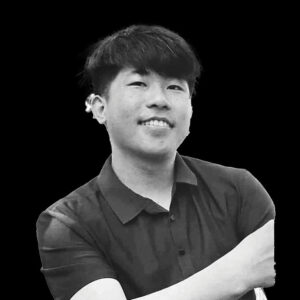
Prabin Kulung Rai
Age 21
A young man whose life was full of quiet ambition and boundless courage. On September 9, at Gaushala, he was shot and killed by police while standing up for the values he believed in. The news traveled swiftly back to his village in Silichong, striking his mother like a physical blow. Overcome with grief, she collapsed, unable to bear the weight of such a sudden loss. A Nepal Army helicopter carried his body over the hills he had once left behind, returning him to his home not merely as a son, but as a Martyr – a symbol of sacrifice for a nation he loved.
In a small room in Kathmandu, Prabin had been quietly pursuing his dreams. He was studying Korean, a step toward a future he had envisioned: moving to Korea, finding work, and transforming the difficult life his family had endured for generations. He was the second of three sons born to Bal Kishor and Malati Kulung, who had moved from the hills of Sankhuwasabha to the capital with one goal, to ensure their younger children had access to better education, a better life.
Prabin’s father, a former rebel fighter, had instilled in his sons a deep sense of justice and the courage to confront wrongdoing. That same fire burned in Prabin. As he observed the corruption and mismanagement that perpetuated hardship across the country, he could not stand idly by. The frustration he felt at a system stacked against the people he cared for drove him to the streets, to the very protests that would claim his life.
He fought not just for himself, but for a country where no one would be forced to leave home or learn a new language merely to survive. To those who knew him, Prabin was more than a protester, he was a loyal friend and a determined student. Friends remember him as diligent, humble and unwaveringly kind. He was the one who quietly prepared for his own future yet never lost sight of the collective dream: a better life for all.
Even in death, Prabin’s vision continues to inspire. His friends speak of honouring him not merely through remembrance, but through action – by carrying forward the work he believed in and building the future he sacrificed his life to protect. He is remembered as a young man who, despite the challenges of life and the weight of systemic injustice, chose courage over comfort. He gave his life so that others might live in a fairer, freer Nepal.
The hills of Sankhuwasabha cradle him now, a hero returned to the land of his ancestors. Yet the story of Prabin Kulung Rai extends beyond those hills, living in every act of bravery, every step toward justice, and every young voice that rises against oppression.
In the village of Arghakhanchi, the wait of a mother ended in the worst possible way. The promise of new clothes for Dashain, of laughter shared and dreams realized, is now a haunting reminder of the life Mishal was meant to live. His absence leaves a void too vast to measure, yet his determination, his compassion, and his love for his family continue to resonate with those who knew him. Mishal’s story is a testament to the silent courage of countless young people striving for a better life, often unseen and uncelebrated until tragedy strikes.

Mishal Saru Magar
Age 18
Only 18 years old, a young man whose life was defined by quiet determination and the weight of responsibility. Mishal had moved from his village in Arghakhanchi to Kathmandu, a city that tests every ounce of ambition. Yet Mishal remained unfazed. Each day, he navigated the relentless traffic as a delivery rider, earning every rupee to pay for his own food, rent and the future he was carefully constructing.
His mission was deeply personal: to reunite his family. His father, who had spent over a decade working in Qatar, had long sacrificed for his children. Mishal promised him that his time of labouring abroad would soon end, that he would earn enough to bring the family together. That promise now hangs in silence, echoing in the empty streets and in the heart of a father half a world away, a dream reduced to ash.
Mishal was more than a hardworking youth; he was a devoted older brother, planning to support his younger siblings through their studies. Just days before his life was cut short, he had promised his mother new clothes for Dashain, the festival that marks family, joy and renewal. That promise now sinks into an unfillable void of grief.
On the day of his death, Mishal was not protesting. He posed no threat. He was simply a boy returning home from work, carrying the quiet weight of his responsibilities. But in a sudden, senseless act of violence, a police bullet found him. He was rushed to the hospital, but in five minutes, Mishal Saru Magar was gone. Five minutes ended a life built on resilience and hope, extinguishing a future forged through hard earned labour.
In the village of Arghakhanchi, the wait of a mother ended in the worst possible way. The promise of new clothes for Dashain, of laughter shared and dreams realized, is now a haunting reminder of the life Mishal was meant to live. His absence leaves a void too vast to measure, yet his determination, his compassion, and his love for his family continue to resonate with those who knew him. Mishal’s story is a testament to the silent courage of countless young people striving for a better life, often unseen and uncelebrated until tragedy strikes. He is remembered not for the way he died, but for the way he lived – humble, hardworking and committed to family above all.
The devastating reality of his death lies in the cruel twist of fate surrounding two flights. The first was the one Abhishek had booked, carrying him toward the life he had worked so hard to build. The second was the one his father had to take back home to mourn a son who would never return.

Abhishek Shrestha
Age 18
At an age when most young people are merely beginning to imagine their future, he had already drawn up a plan for his life. He was not only a teenager with dreams but a young man carrying the weight of responsibility for his family. As an older brother, he was determined to carve a path for himself so that he could support his younger brother and sister. Every decision he made, every step he took, was guided by a sense of duty and love. As a devoted son, he had been preparing to fly to Saudi Arabia, intending to join his father, who was already working in Dubai, in sharing the heavy burden of sustaining the family. His future was mapped with care, each milestone aimed at securing a better life, not just for himself, but for those he loved most.
Abhishek’s life, however, was cut tragically short. On September 8, he took to the streets to protest, an act his family was unaware of. He had always been a quiet, focused boy, steadfast in his commitments and devoted to his responsibilities. That day, he became one of countless young voices demanding justice, yet his voice was silenced before he could continue shaping his own story.
The devastating reality of his death lies in the cruel twist of fate surrounding two flights. The first was the one Abhishek had booked, carrying him toward the life he had worked so hard to build. The second was the one his father had to take back home to mourn a son who would never return. The father who had left his homeland seeking better opportunities for his family was forced to come back and face the unthinkable: laying his son to rest.
Abhishek embodied responsibility in a way that is rare for someone so young. He was a provider in the making, a son whose actions reflected love and dedication, and a brother whose presence brought pride and hope to his family. In just four days, he was to embark on a new life, one that promised opportunities and security, not only for himself but for those he cared about most. Yet, that journey was denied to him, leaving a void that cannot be filled.
The story of Abhishek Shrestha is a testament to the resilience, determination, and selflessness of youth. It is a reminder of the fragility of life and the heavy cost borne by families who invest their hopes and dreams into their children. Even in death, Abhishek’s legacy lives on,—not merely as a victim of a tragic incident, but as a young man whose intentions, dedication and love for his family and country remain unforgettable.
Text: Kreenjala Pyakurel