WOW brings to you women who chose to walk the road less travelled, they are the trailblazers who have made unconventional career choices. Their success serves as a powerful reminder that anything is possible so long as you are willing to work hard for it. We spoke to them to learn about their career, what a typical day at work looks like for them and what is the impact that they hope to achieve. Excerpts
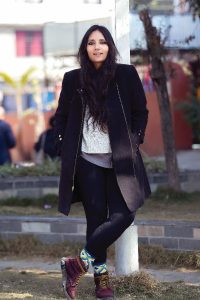
Shristi Singh Shrestha
Animal Rights and Environmental Activist
Shristi has been campaigning for animal rights for more than 17 years. In 2007, she became an animal rights activist. She hopes to build a world where animals are not treated as products and machines, where their intelligence and emotions are acknowledged. She wants people to understand that to lead a balanced and happy life with nature, we must not exploit animals. Animals are sentient beings who experience love, fear, joy, hunger and pain just as we do.
How did you get into your career? What does a typical day of work look like for you?
I do not consider what I do as my career. My love for animals and my passion for the same drive me every day to create a better world for them. My day of work is an amalgamation of countless meetings and collaborations to enhance and engage in interventions that directly or indirectly help and benefit the animals. It includes rescues, policy amendments, legal initiatives, collaborations with other organisations and activists, community outreach, and school programmes among others. I do not have a set work timing. I start working from the moment I wake up till I go to sleep as every moment is precious for the animals, both captive and wild who are suffering due to human interventions.
Why do people hesitate to choose an offbeat career?
I assume it is because of a lack of security, both financial and social.
How can the industry be more inclusive and supportive of women in offbeat careers?
Anyone who chooses to engage in offbeat careers usually does that out of passion and creativity. It is vital that a strong support system is essential. Thus, is curated in such a way that the women who choose a path of challenges and limitations are heard, appreciated, and helped both professionally and socio-culturally. This support system may consist of units that engage women in conversations and decision-making processes along with mentorship and collaborations. In short, the industry, both at home and at work, need to invest in women without fail.
Are there any particular skills or qualities that you developed along the way that played a crucial role in your success?
I am far from being successful as I strongly believe that my work is not complete as long as there is even one animal suffering. However, throughout 17 years of working for animals, the environment, and now climate justice, I have learned to be patient, articulate, and centred. The work that I do involves becoming an audience to cruelty and injustice towards animals on a daily basis. This experience can change a person forever. I firmly believe that this journey is not about me. It is about the animals who suffer every second and their suffering is much more than me having to be subjected to just observing the treatment towards them. This clarity has helped me in moving forward with much more determination, grit, and unwavering will.
Have you faced any societal expectations regarding your career choice, and how have you handled them?
I have never paid heed to any expectations that society has of me. I do not give the power to anyone to make me feel less about what I do and how I pursue my path. Therefore, it does not take much from me to handle these expectations as they do not matter to me as long as I know that I am walking on this path with utmost honesty, empathy, and clear conscience.
What impact do you hope to make through your career?
The treatment of animals is vile in our society. Whether it is the dog breeding industry, captive elephant tourism, meat/dairy industry or habitat encroachment, human-induced wildlife conflict, and climate change, the situation of animals is not looking to change overnight. I understand this and while I disagree that I cannot do anything, I also acknowledge that I cannot do everything. This realisation has carved a clear path ahead of me. I hope that humans see and remember the relationship we share with nature and with animals. I hope that the work that I do will make people understand the repercussions of our thoughtless actions and senseless arrogance. I hope that my work will add to the work done by those before me to change a system of oppression and injustice and instigate much-needed change in how we view animals and the world around us. I hope I will be able to contribute to creating a better and safer future for our children and in this journey, if I am successful in getting a single policy to change, a single tree to bloom, a complex system to rethink, and a single individual to join me, I will be fuelled to move forward even more.
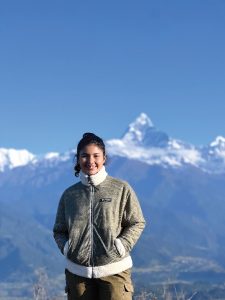
Muna KC
Travel Content Creator
In her early 20s, Muna KC got interested in travelling and exploring Nepal. Initially, she explored places in and around her hometown, Pokhara. Later she began to trek in the mountains from parts of the Annapurna region to remote areas of Jumla, Mugu and Dolpa. She makes videos of her journey and shares them on social media to encourage others to travel and explore.
How did you start your career? What does a typical day of work look like for you?
I was always fond of making videos. But 2020-21 was the year I started posting like a creator. In 2020, when Covid hit us with many restrictions, I had a lot of free time. In the evening I would ride my bicycle to a peaceful place carrying a thermos with hot tea. Then I made a video of me drinking it in nature. I initially posted many videos of me drinking tea in different places and I changed my user ID to “Munachiya”, Muna being my name and “chiya” being my favourite thing to drink. I also had a group of friends who were outgoing and adventurous. I was influenced by them to explore new places. We would plan hikes and treks and I would record our travel moments. I never thought I would pursue content creation professionally but as I posted consistently about my travel diaries, I got positive responses from the viewers, and the rest is history.
As a creator, my work is to make videos for the brand so most of my time goes on conceptualising and editing. As different brands have different goals and visions, I need to constantly be in touch with them for feedback. Also, some of my work involves travelling to attend events, visiting hotels and resorts for promotional shoots, etc.
Why do people hesitate to choose an offbeat career?
From childhood we were told to be a certain title, be it an engineer, doctor, or pilot. If you pursue any career path other than a typical title acknowledged by society, you are a failure. The burden of being outcasted by our own family and society is so heavy that many people hesitate or give up on their actual interests and dreams.
How can the industry be more inclusive and supportive of women in offbeat careers?
The partiality between men and women has always prevailed in society, however, I have seen a great shift in such mentality in recent years. Women are now encouraged to pursue their dreams. In such a progressive state of change, it would be great if they are provided with mentorship programmes, given equal opportunities, evaluated in terms of skills/talent, etc. When the gender bias is mitigated or reduced it provides better opportunities for women to showcase their skills, and a safe and constructive working environment is cherry on top.
Are there any particular skills or qualities that you developed along the way that played a crucial role in your success?
My basic video editing skills and positive mindset have led me through. Growth in social media is tricky. Sometimes you work so hard on a project/content but it will not meet your expectations. On the other hand, your zero-effort content gets a million views sky-rocketing your reach. What I have learned through this journey is that don’t get disheartened, keep creating, show consistency, focus on one target audience, and review analytics. Be up-to-date with trends, current affairs, and prevailing opportunities.
Have you faced any societal expectations regarding your career choice, and how have you handled them?
Yes. It is not easy to convince your family that you will not become what they are expecting. When I told my parents I didn’t want to do a 10-5 job but be a travel content creator, they were disappointed. But more than disappointment they had confusion; they could not make sense of how I would earn and be independent by just making videos. It is a fair question as content creation is just emerging as a career opportunity. Since it is a digital age, its scope is at its peak. I believe not everyone deserves your explanation but you can convince your close ones to support you.
What advice would you give to women considering pursuing a non-traditional career path?
I would like to tell them to just believe their intuition and go for it. Don’t think about what people will say, think about the inner joy and peace that will come when you listen to your heart.
What impact do you hope to make through your career?
I have a clear goal of promoting tourism in Nepal at the national as well as international level. Nepal is a beautiful country but many people still don’t know the potential it holds. I want to be the narrator of our places, people, and culture. Through my videos, I have been able to grab the attention of millions of people to showcase the beauty of Nepal and I will continue to do so.

Prakriti Dhakal
Campaigner
Prakriti is the Founding President of United for Impact (UFI), a social enterprise that leads youth-focused initiatives in empowerment and public health. As a young, energetic youth leader, she is striving to positively impact community health and health-related policies. Additionally, she is also the initiator of the “HamroBahini’’ campaign which empowers and awares the youth on sexual and reproductive health and rights. She has received international recognition for her work and research in the area of SRHR, including the Oxford University Community Voice Award.
How did you start your career? What does a typical day of work look like for you?
“Evolving Every day” is the norm I believe in and adhere to; it is the foundation that has been guiding every step of my life; and the mantra that inspires me to learn, grow, and thrive every day. A recent, meaningful experience in Sri Lanka strongly echoed my journey. A 17-year-old Muslim girl approached me during a training session, embracing me tightly, and said with conviction, “I want to be you when I grow up.” Such encounters, where I see reflections of myself in others, or they see potential in my story, are profound affirmations of my path.
My journey in public health has been shaped by encounters that profoundly altered my perspective on social and political determinants of health, health disparities, and the pressing need for upstream policy change, especially among young women. As the first member of my family to embark on higher education, this journey holds immense personal significance.
During a clinical experience in ultrasound, I encountered a patient, Binita (name changed), who shared my birth year and was pregnant in the meantime. Engaging in conversation, I discovered she was already a mother of two at just the age of 20. Her story starkly exposed the reality confronted by many young women in my community. Her narrative illuminated the glaring disparity between my opportunities and the constrained choices faced by young mothers like her.
Observing the struggles of women in my community, where early marriage and motherhood are common, ignited a profound sense of responsibility within me. I recognised the privilege of my education and the potential to shape my future. At that moment, I made a commitment to dedicate my life’s opportunities to supporting and empowering young women like her, enabling them to be self-sufficient and make informed decisions about their lives. This experience deeply anchored my commitment to public health and community empowerment. It strengthened my determination to ensure young women have access to education, healthcare, and the autonomy to pursue choices in alignment with their aspirations.
This led to the founding of ‘United For Impact,’ a non-profit organisation committed to empowering women through public health education and catalysing progress in governance and economic development. As the Executive Director of ‘United for Impact,’ my days are filled with strategic planning, team coordination, and community engagement. Our mission is deeply rooted in enhancing initiatives like ‘HamroBahini,’ which focuses on improving Sexual and Reproductive Health and Rights. Every day, we strive to make a meaningful difference in the lives of those we serve.
Why do people hesitate to choose an offbeat career?
The decision to step into an offbeat career is often clouded by uncertainties and the fear of the unknown. In places like where I come from, where job opportunities are scarce and societal norms often don’t favour women in the workforce or in decision-making roles, choosing an unconventional path can feel like a significant risk. It’s not just about the career; it’s a challenge to the very fabric of traditional roles and expectations.
But here’s the thing — it’s in these uncharted paths that we often find the most opportunities for change and personal growth. My own journey, venturing from a science-based background into the realm of community development, hasn’t been a walk in the park. It’s been a path filled with hurdles, but every step has been worth it. It’s like embracing the risk because you know that on the other side lies the chance to make a real difference.
This deep-rooted desire to shatter stereotypes and create a unique path is what drives me. Yes, it’s daunting, but it’s also empowering. Finding people who share your values and vision can make this journey less lonely and more affirming. We are not just carving our own paths; we are laying down tracks for others to follow.
It’s vital to bring to light the successes of those who’ve thrived in offbeat careers. By showcasing these stories, we can inspire and assure others that these paths are not just possible, but can lead to profound fulfilment and impact.
Choosing an offbeat career is more than a personal choice; it’s a statement. It’s an assertion that success isn’t confined to conventional paths. It’s a testament to the power of diversity in career choices and the unique impact one can have by stepping off the beaten path. When we dare to choose differently, we’re not just forging our own way; we’re lighting a beacon for others, empowering them to redefine success and break through barriers.
How can the industry be more inclusive and supportive of women in offbeat careers?
During a recent round of interviews for a project, I observed something striking. While maintaining an unbiased approach, it became apparent that the women and girls stepping forward had something special. They possessed a remarkable sense of empathy and humility, qualities that stood out distinctly. This observation underscored a crucial point: when we talk about treating everyone equally, it’s not just about offering the same opportunities; it’s also about respecting and valuing the unique strengths each person brings to the table, especially those often overlooked in traditional settings.
To make a real difference, industries should actively promote gender diversity and create environments that celebrate these unique perspectives. Mentorship tailored for women is key, as is ensuring their representation in leadership and decision-making roles. It’s about making sure women’s voices are not just heard but are influential in shaping policies and driving change. Industries need to champion women’s inclusion not as a token gesture, but as a core part of their culture, harnessing their diverse skills and perspectives for true innovation and growth.
Are there any particular skills or qualities that you developed along the way that played a crucial role in your success?
One of the most frequent compliments I receive is that I bring an incredibly high energy to my work and am both a quick learner and innovative. This feedback has always been a driving force, continually shaping my approach to professional growth and skill acquisition. It’s like every day presents a new learning opportunity, and I embrace each one wholeheartedly. Whether it’s diving deep into a new subject or juggling multiple tasks, I am always eager to enhance my abilities to ensure the best possible outcomes in my work.
This relentless pursuit of learning and improvement has been a cornerstone of my career. Strategic thinking is a key skill that I’ve cultivated, enabling me to adeptly navigate through complex projects and foresee potential challenges. My journey has also been marked by resilience, a trait developed through diverse experiences, allowing me to adapt and thrive even in adversity.
Empathy lies at the heart of my work, guiding my efforts to understand and meet the needs of the communities I serve. This empathy, combined with a robust set of technical and managerial skills, forms a potent mix that drives my effectiveness in various roles. Skills in project and people management, system analysis, design thinking, research, business development, and policy analysis have been especially crucial. These skills were honed during my MBA and have continued to evolve through my professional experiences.
My ability to communicate effectively, both in writing and speaking, has been instrumental in advocating for public health issues and leading impactful projects.
In essence, my career journey is a tapestry of continuous learning, strategic application of skills, and an unwavering commitment to making a positive impact. The combination of technical know-how, managerial acumen, and personal attributes like resilience and empathy has been key to my success. Each day brings new challenges and learning opportunities, and I approach them with the same zeal and dedication that has been recognizsd and appreciated by those around me.
Have you faced any societal expectations regarding your career choice, and how have you handled them?
In the middle of my hustle and bustle, someone once remarked, “You are a promising leader.” This statement left me momentarily awestruck, pondering its true meaning. The person elaborated, “You are in your mid-20s, and yet you are breaking norms and challenging societal expectations with your career choices. It’s inspiring to see someone so young steer away from conventional paths and lead with such passion and purpose.”
Coming from a family where I am the fourth daughter, with all my sisters already married and settled, my career choices sometimes paint me as the ‘black sheep’ at home. Yet, it is this very background that has strengthened my resolve. Explaining my dreams and goals to my middle-class family has honed my skills in articulating my professional vision to stakeholders and beneficiaries. My family has been the backbone of my growth, helping me navigate and reshape conventional expectations. Their support has been instrumental in shaping me into a passionate, independent woman. This support system makes me feel fortunate and drives my commitment to extending a helping hand to other girls and women who might not have similar opportunities.
With UFI, a pivotal experience for me was during our ‘HamroBahini’ initiative, aimed at addressing the complex issue of Sexual and Reproductive Health and Rights education. It was more than imparting public health knowledge; it was about challenging ingrained cultural norms and empowering young minds with information. The curiosity and openness of a young boy questioning menstrual practices and a shy girl sharing her confusion were powerful moments. They underscored the need to balance respect for cultural practices with the promotion of scientific understanding.
Working in a field focused on SRHR in South and Central Asia comes with its set of societal challenges beyond borders. I have tackled these by staying committed to my cause, using education and awareness to shift perceptions and highlight the importance of women’s roles in public health and leadership.
What advice would you give to women considering pursuing a non-traditional career path?
I would rephrase non-traditional career paths to promising career paths.
For women contemplating a promising career path, one that might veer away from the traditional, my message is clear: Embrace your journey with boldness and confidence. While these paths less travelled may seem daunting, they are often the ones leading to the most extraordinary accomplishments.
First and foremost, never underestimate the power of knowledge. Whether through formal education or self-guided exploration, immerse yourself in learning. The more you know, the better prepared you’ll be to face challenges and seize opportunities.
Building a robust support network is also key. Surround yourself with people who share your vision – mentors, peers, family, or a broader community. They’re not just your support system; they’re your team, helping you to go further and ensuring your vision lives on. As the saying goes, you might reach faster alone, but with a team, you’ll reach further. Encourage the younger generation to take your vision forward, giving them ownership and space to grow.
Another crucial aspect is identifying role models. List three people, anywhere in the world, whose career paths inspire you. Study their journeys, their challenges, and if possible, connect with them. Follow them on platforms like LinkedIn to learn from their experiences.
Financial preparedness is vital. Understand the job market, consider freelancing, and hone your skills in money management. Being financially savvy will help cushion the reality checks along your journey.
Lastly, stay true to your goals. In a world often inclined towards conventional paths, holding fast to your unique vision is an act of bravery. Your unique perspective is vital for driving societal change. The world needs diverse voices and innovative thinkers, so don’t shy away from being one of them.
Embrace your path with determination, knowing that your journey has the power to inspire and pave the way for others. As a woman on an unconventional career path, you’re not just achieving your own goals – you’re setting an example and broadening the horizons for those who will follow in your footsteps.
What impact do you hope to make through your career?
At the heart of my work is a commitment to enhancing health literacy, academia, shaping effective health policy, and fostering economic development. My primary goal is to empower young women by ensuring that their health rights are not only recognised but also easily accessible. Through this, I aim to contribute to building a healthier and more equitable society.
My team and I have already made strides in this direction with our system analysis research on infertility. This study highlighted significant gaps in health policy, especially in the realm of sexual and reproductive rights. The insights gained from this research, which involved detailed policy assessments with legislators, underscore the need for ongoing exploration and advocacy in various aspects of health policy.
Looking forward, my objective is to craft policy recommendations that balance fairness, efficiency, affordability, and accessibility while ensuring sustainability. In a world rapidly evolving with digital advancements and unprecedented challenges like the Covid pandemic, my focus is on advocating for policies that not only keep pace with these changes but also anticipate future needs. This includes modernising health infrastructure and embracing digital health service systems, ensuring that our health policies are not just reactive but proactive and forward-thinking.
Through these efforts, I hope to drive a transformation in the health sector, one that aligns with the evolving demands of our society and leverages technology for greater health outcomes. My vision is to see a health system that is responsive, inclusive, and equipped to meet the challenges of today and tomorrow, ensuring a healthier future for all.

Sabitra Bhandari
Footballer
Sabitra Bhandari, popularly known as Samba, is a Nepali professional women’s footballer who plays as a forward. She has created a new record by scoring the highest number of international goals ever by any Nepali woman footballer. National team striker, Sabitra, alone scored a dozen goals as the Armed Police Force Club (APF) demolished Chaudandigadhi Municipality in the National Women’s Football League. She is the first Nepali player to compete in the European League under the European Football Federation banner. She is the all-time highest goal scorer in Nepali football history with 43 goals.
How did you start your career? What does a typical day of work look like for you?
Since a very young age, I was very interested in playing football even though in the village there was no proper ground or field dedicated to the sport. In my part of the village, it was very conservative and a girl playing football was not considered good by the family and society. This did not stop me from going forward with my dreams.
My day starts with two hours of training and again two hours of workout in the evening while maintaining a sport specific diet.
Why do people hesitate to choose an offbeat career?
There is no such thing as an offbeat career if you are passionate about it and want to pursue it in your life. Although society and people may find it hard to accept it, once you start doing well, nobody talks about anything. You have to take it very seriously and not treat it as a hobby. Hard work and dedication have to be at the core of what you do. Meet the challenges and be consistent. You will succeed.
How can the industry be more inclusive and supportive of women in offbeat careers?
The industry and the government can be more supportive by providing good remuneration for sports people and all careers. In Nepal, the government doesn’t provide financial stability to women in offbeat careers so they are forced to find other means of living. They should organise more tournaments and games to find more new players that can play for the country in the future.
Are there any particular skills or qualities that you developed along the way that played a crucial role in your success?
Back in my village, I was responsible for many household chores but I also helped my father and brother with all the work like chopping wood and fetching water, and ploughing the field. The work a man could do physically, I would do the same amount of work. I think this helped me in my physical attributes in football.
Have you faced any societal expectations regarding your career choice, and how have you handled them?
When I used to play football back in my village, people would tell my parents to tell me not to play sports. They would tell my parents that they should be embarrassed of themselves for allowing a girl to play sport. My parents were very supportive of my choices and never let me be bothered by such comments and criticisms that came at the beginning of my career. I am deeply thankful to them.
What advice would you give to women considering pursuing a non-traditional career path?
Whatever career you want to be in, whether traditional or non-traditional, you should give your hundred percent passion to it. Your future dreams start with your hard work today. Discipline is the main element for pursuing and being successful in your career.
What impact do you hope to make through your career?
I want to be a positive role model for the future generation that wants to pursue their dreams in sports. For rural Nepal, I want everyone to play sports despite their gender. Sports builds character.